





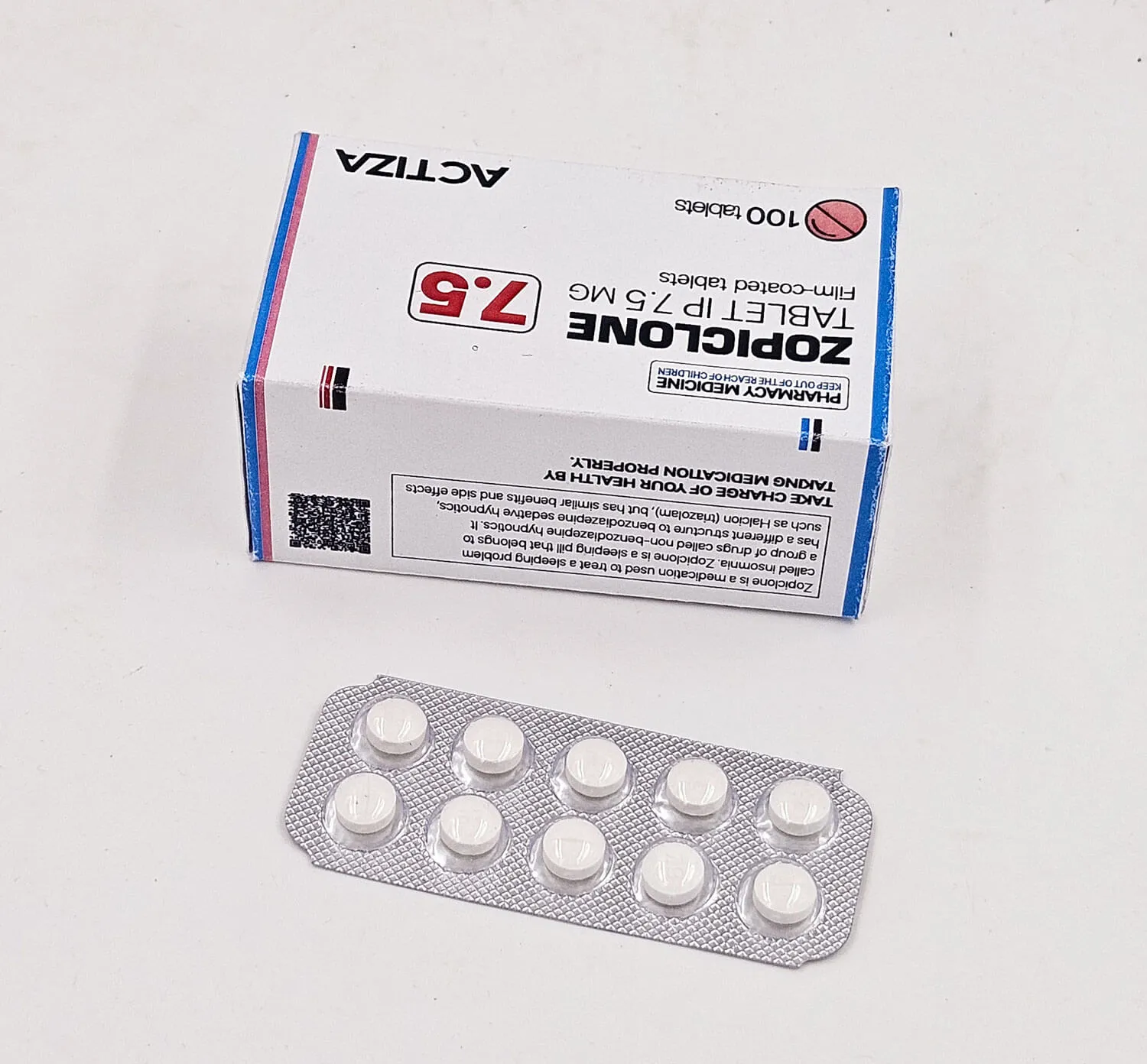
Zopiclone is one of the most commonly prescribed “Z-drugs” in the UK for short-term insomnia. While it can be effective for helping people fall asleep quickly, NHS and NICE guidance are very clear: it is not intended for long-term use due to risks of tolerance, dependence, and withdrawal.
This article explains what NHS guidance actually says, how long it is considered safe to use, and what risks come with extended use. The keyword “Zopiclone order UK” is included for informational context only.
What is Zopiclone and how does it work?
Zopiclone is a prescription sleeping tablet used to treat short-term insomnia. It works by enhancing the effect of a calming chemical in the brain called GABA, which slows brain activity and promotes sleep.
According to NHS information, it helps you:
- Fall asleep faster
- Reduce night-time awakenings
- Improve short-term sleep quality
However, it does not treat the underlying cause of insomnia, such as stress, anxiety, or poor sleep habits.
NHS guidance: how long can you safely take Zopiclone?
NHS-aligned guidance and NICE recommendations consistently state that Zopiclone should be used for the shortest possible duration.
Typical recommended duration:
- 2–5 days for very short-term (transient) insomnia
- Up to 2–3 weeks for short-term insomnia
- Absolute maximum: around 4 weeks (including tapering)
In most clinical settings in the UK, doctors aim for:
- 1–2 weeks maximum
- Only in severe insomnia where non-drug treatments have failed
Why long-term use is discouraged
NHS and formulary guidance highlight several key risks when Zopiclone is used beyond a few weeks:
1. Tolerance develops quickly
Within 3–14 days, the body can adapt, meaning the same dose becomes less effective.
This often leads to:
- Reduced sleep benefit
- Higher risk of dose escalation (not recommended)
2. Dependence and addiction risk
Zopiclone can cause:
- Physical dependence
- Psychological reliance on the drug to sleep
Even short-term use may create withdrawal symptoms if stopped suddenly.
3. Withdrawal and rebound insomnia
Stopping suddenly after regular use may lead to:
- Worse insomnia than before
- Anxiety or irritability
- Sleep fragmentation
This is known as rebound insomnia and is a major reason doctors avoid long prescriptions.
4. Daytime side effects and safety risks
Longer use increases risk of:
- Daytime drowsiness
- Poor concentration
- Falls (especially in older adults)
- Memory problems
These effects can affect daily functioning and safety.
Is Zopiclone ever used long-term?
In standard NHS practice, routine long-term prescribing is not recommended.
In rare cases, a doctor may continue it temporarily if:
- Other treatments have failed
- The patient is under specialist supervision
- Benefits clearly outweigh risks
Even then, it is usually:
- Intermittent (not nightly use)
- Closely monitored
- Regularly reviewed
Safer long-term approach to insomnia
NHS guidance strongly recommends that chronic insomnia should be managed with non-drug treatments such as:
- Cognitive Behavioural Therapy for Insomnia (CBT-I)
- Sleep hygiene improvements
- Stress and anxiety management
- Regular sleep routine building
These approaches are considered more effective long-term than sleeping tablets.
Important note on “Zopiclone order UK”
Some people search online for “Zopiclone order UK”, but it is important to understand:
- Zopiclone is a prescription-only medicine in the UK
- It should only be obtained through a registered healthcare provider
- Buying it without a prescription can be unsafe and illegal
If insomnia persists, the safest route is always:
GP consultation → proper diagnosis → supervised treatment plan
Key takeaway
- Zopiclone is designed for short-term use only
- NHS guidance typically limits use to 2–4 weeks maximum
- Long-term use increases risk of:
- dependence
- tolerance
- rebound insomnia
- side effects
It can be helpful in the short term, but it is not a long-term sleep solution.